Limited palette
Specify a small, coherent color set and inspect gradients or extra colors that undermine the treatment.
Annual billing Everygen annual plans cost about 50% less than monthly billing
 Everygen
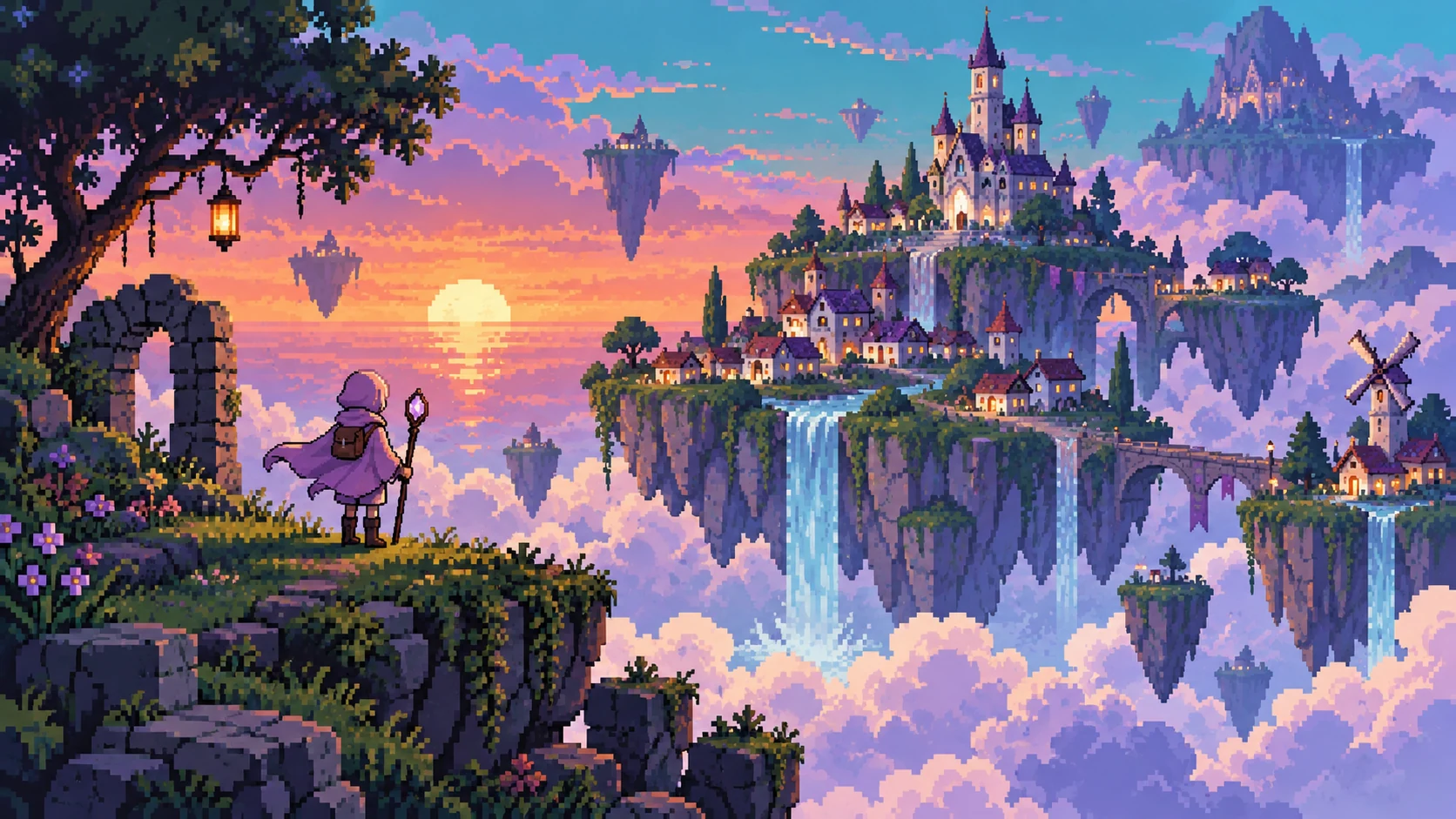
Explore a pixel-style scene with a limited palette and readable forms. Define the camera view, then inspect edges before preparing a game-ready asset.
An original isometric pixel-art greenhouse with teal glass, clay pots and a twelve-color palette, crisp blocky edges.
The output is a pixel-style image concept, not a guaranteed exact sprite grid. Use a limited palette and readable forms, then clean up edges, dimensions and animation frames in a pixel-art tool before production use.
Specify a small, coherent color set and inspect gradients or extra colors that undermine the treatment.
Check whether edges follow a consistent pixel rhythm instead of assuming the generated image uses a uniform grid.
Choose a front, side, top-down or isometric view so the scene's perspective fits the intended game-art concept.
Write a visual brief with a subject, layout, material and light.
Check the selected model or tool, its offered output controls and current credit estimate. Submit only when the required service is available.
Compare the result with the source or brief at the intended display size, then inspect small details before saving the selected image.
Use a small, coherent color family and inspect extra gradients that weaken the pixel treatment.
Front, side, top-down and isometric views require different shape and perspective cues.

Use a clear silhouette before adding small texture or scenery details.

Generated pixel-style art may use inconsistent edge steps and needs cleanup before production use.
Set exact dimensions, clean pixels and create any required animation frames in your own pixel-art workflow.
Newly generated illustrations show possible art direction. Adapt the original briefs for your own inputs and compare the result.
An original isometric pixel-art greenhouse with teal glass, clay pots and a twelve-color palette, crisp blocky edges.
An original isometric pixel-art greenhouse with teal glass, clay pots and a twelve-color palette, crisp blocky edges. Keep the composition simple and show the subject clearly.
An original isometric pixel-art greenhouse with teal glass, clay pots and a twelve-color palette, crisp blocky edges. Use restrained lighting and review fine details at the final viewing size.
Compare monthly plans, annual billing and one-time credit packs. Check allowances, credit expiry and the editor estimate before choosing paid access.
Billed once yearly · Cancel renewal anytime
0.025 / credit
$179 billed yearly · Save $179.8
 MiniMax H3
 HappyHorse 1.1
 Seedance 2.5
 Grok Imagine 1.5
 Gemini Omni
 GPT Image 2.5
 Seedream 5.0 ProNano Banana 2 LiteGPT Image 2Nano Banana 2
0.017 / credit
$299 billed yearly · Save $299.8
MiniMax H3HappyHorse 1.1Seedance 2.5Grok Imagine 1.5Gemini OmniGPT Image 2.5Seedream 5.0 ProNano Banana 2 LiteGPT Image 2Nano Banana 20.014 / credit
$599 billed yearly · Save $599.8
MiniMax H3HappyHorse 1.1Seedance 2.5Grok Imagine 1.5Gemini OmniGPT Image 2.5Seedream 5.0 ProNano Banana 2 LiteGPT Image 2Nano Banana 20.012 / credit
$1,199 billed yearly · Save $1,199.8
MiniMax H3HappyHorse 1.1Seedance 2.5Grok Imagine 1.5Gemini OmniGPT Image 2.5Seedream 5.0 ProNano Banana 2 LiteGPT Image 2Nano Banana 2Specialized operations stay separate from the model list.
MiniMax H3Live estimate in the editorHappyHorse 1.1Live estimate in the editorSeedance 2.5Live estimate in the editorGrok Imagine 1.5Live estimate in the editorGemini OmniLive estimate in the editorGPT Image 2.5Live estimate in the editorSeedream 5.0 ProLive estimate in the editorNano Banana 2 LiteLive estimate in the editorGPT Image 2Live estimate in the editorNano Banana 2Live estimate in the editorGeneration costs depend on the selected model, supported settings and configured provider. The editor shows the current estimate before submission.
Annual cards show a monthly-equivalent allowance. The full annual credit allowance is granted on successful payment and expires after 365 days; monthly credits are valid for 30 days. Credit-pack validity is shown on each card.
Explore a pixel-style scene with a limited palette and readable forms. Define the camera view, then inspect edges before preparing a game-ready asset.